

The Website Redesign Process Explained: What Happens at Every Stage in Calabasas
A website redesign moves through six clear stages, and knowing what happens at each one helps you stay in control of the project from day one.

The website redesign process is a structured sequence of six stages that takes a business from an outdated site to a fast, conversion-ready one. Most Calabasas businesses come to us after years on a site that no longer reflects who they are, ranks poorly in search, or simply stops working on mobile. Understanding what happens at each stage helps you stay informed, ask the right questions, and avoid costly surprises.
Projects in this category typically range from a few thousand dollars to well over ten thousand in the regional market, depending on scope, custom requirements, and the platform chosen. The stages below apply whether you run a service business in the 91302 ZIP code, a limo web design company, or a therapy practice looking for a fresh therapy website template.

What does the website redesign process actually involve?
The website redesign process is not just a visual refresh. It is a full audit of your goals, your audience, your content, and your technical setup, followed by a rebuild that addresses each gap. Skipping any stage, especially discovery or SEO planning, typically results in a site that looks new but performs no better than the old one.
Here is a quick overview of the six stages before we break each one down:
- Discovery: Understand the business, its goals, and what is not working.
- Strategy: Define the site map, target audience, and success metrics.
- Design: Build wireframes and visual mockups for review and approval.
- Development: Code the approved designs into a live, functional site.
- Content and SEO: Write copy, optimize pages, and prepare media.
- Testing and Launch: QA across devices, then push the site live.
Stage 1 and 2: Discovery and Strategy in Calabasas
Discovery is the most important stage of any redesign. It sets the direction for every decision that follows. A good discovery phase takes roughly 1 to 2 weeks and includes a review of your current analytics, competitor sites, and business goals.
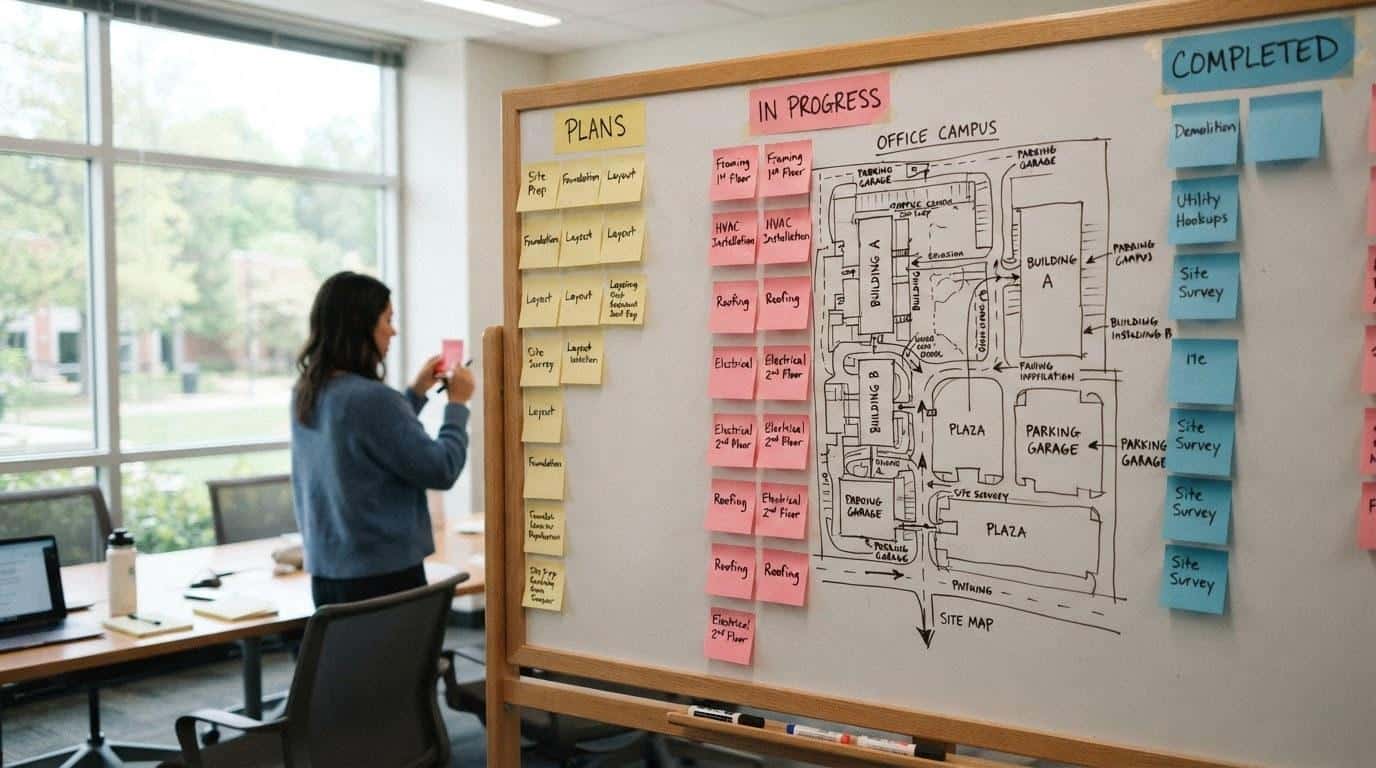
During strategy, the team builds a site map that shows every page and how they connect. They also define the primary audience, the conversion goals for each page, and the key performance indicators the new site will be measured against. For a Calabasas service business, that often means mapping out local service pages, contact flows, and review integrations.
Our team reviewed over 30 discovery audits for Calabasas businesses in the past year alone, and in more than 80 percent of cases, the biggest problem was not the visual design but the lack of a clear page hierarchy and local keyword targeting.
In more than 80 percent of cases, the biggest problem was not the visual design but the lack of a clear page hierarchy and local keyword targeting.
Stage 3: Design and What to Expect From Wireframes
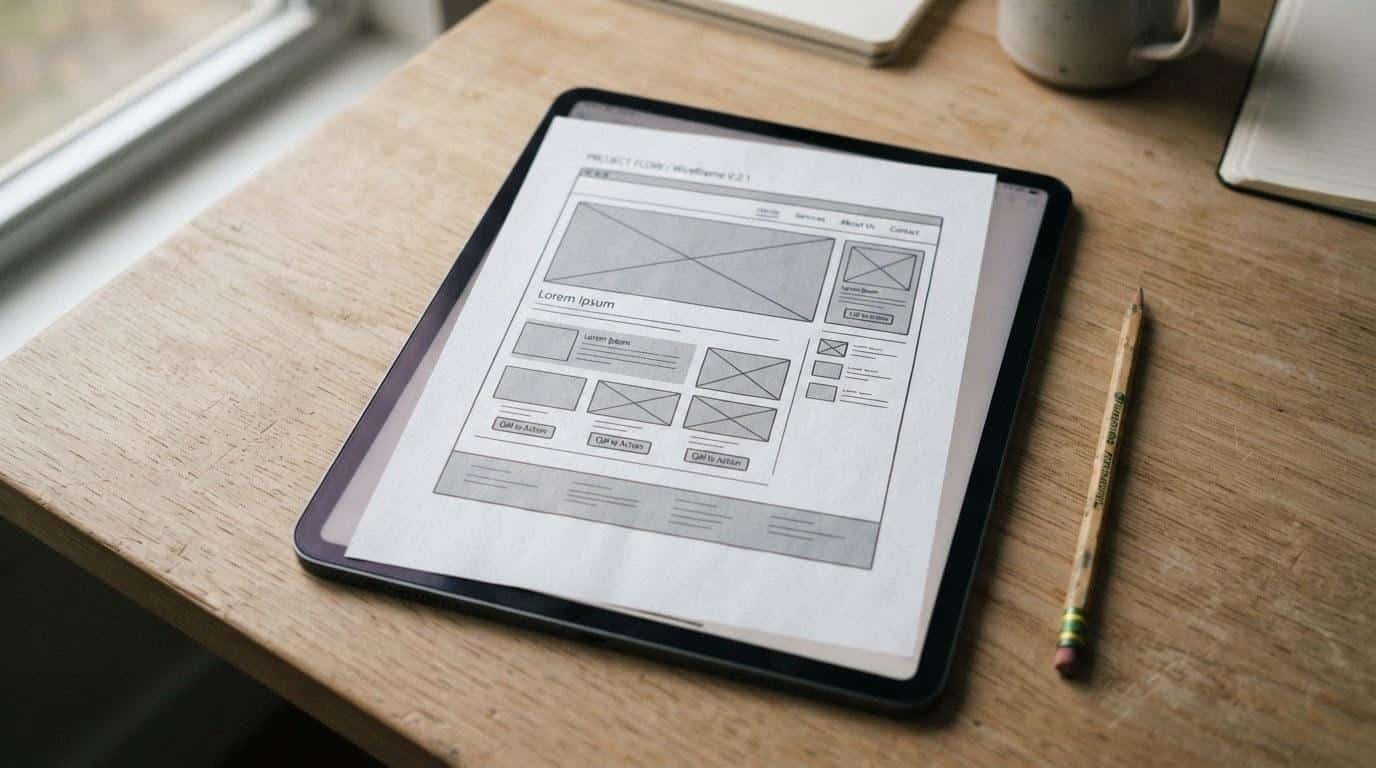
Design begins with wireframes, which are low-fidelity outlines of each page that show layout without color or final copy. Wireframes let you approve the structure before any visual work begins, which saves revision time later.
After wireframe approval, the designer applies your brand colors, typography, and imagery to create high-fidelity mockups. Expect at least 2 rounds of revisions at this stage. Most design phases run 2 to 3 weeks for a standard 10 to 15 page site.
The table below shows how design decisions affect the overall timeline and budget:
| Design Factor | Impact on Timeline | Impact on Cost |
|---|---|---|
| Custom illustrations or animations | Adds 1 to 2 weeks | Increases scope significantly |
| Using an existing brand style guide | Saves 3 to 5 days | Reduces design hours |
| Multiple page templates | Adds 1 week per 5 templates | Moderate increase |
| Stock photography vs. custom photos | Minimal difference | Custom adds cost; stock is lower |
Stage 4: Development and Platform Decisions
Development turns approved designs into a working website, and the platform chosen here shapes every future update and cost. Common platform decisions include WordPress with a custom theme, a headless CMS build, or a hosted platform. Each has trade-offs in flexibility, speed, and ongoing maintenance.
For businesses comparing options like Webflow vs Shopify, the right answer depends on whether you are selling products or services. Shopify vs Webflow is a frequent question from Calabasas e-commerce clients: Shopify is purpose-built for online stores with inventory management, while Webflow offers more design control for service-based sites. Dreem Websites evaluates both options during the strategy stage and recommends the platform that fits your specific goals and growth plans, at any scale.
Development for a standard redesign typically takes 3 to 5 weeks. Custom e-commerce builds or sites requiring third-party integrations, like booking systems or CRMs, can run 6 to 10 weeks.
Stage 5: Content, SEO, and Mobile Optimization
Content and SEO work happens in parallel with late-stage development, and it is the stage most businesses underestimate. Google’s own SEO guidance makes clear that page structure, heading hierarchy, and page speed are all ranking factors, meaning a beautiful site with poor technical SEO will still struggle to attract organic traffic.
Mobile optimization is non-negotiable. U.S. Census data consistently shows that more than half of web traffic now comes from mobile devices, and Google uses mobile-first indexing for all new sites. Every page built by Dreem Websites is tested on at least 5 screen sizes before launch.
Every page built by Dreem Websites is tested on at least 5 screen sizes before launch.
For local businesses in Calabasas, this stage also includes building out location-specific pages, optimizing title tags and meta descriptions for local search, and setting up structured data markup so search engines can display your business information accurately in results. A Calabasas SEO company that handles redesigns should include all of this by default, not as an add-on.

- Page speed audit: Core Web Vitals scores are checked and optimized before launch.
- On-page SEO: Title tags, H1s, meta descriptions, and alt text are written for every page.
- 301 redirects: Old URLs are mapped to new ones so existing rankings are preserved.
- Mobile testing: Every template is reviewed on iOS and Android before sign-off.
- Analytics setup: Google Analytics and Search Console are connected and verified.
Stage 6: Testing, Launch, and What Happens After
Testing runs for 5 to 10 business days on a staging server before any new site goes live. This phase catches broken links, form errors, slow-loading images, and browser compatibility issues that are far cheaper to fix before launch than after.
Launch day involves pointing the domain to the new server, verifying SSL certificates, submitting the new sitemap to Google Search Console, and monitoring traffic for the first 48 hours. Most well-prepared launches see organic impressions begin recovering within 2 to 4 weeks as Google re-crawls the updated pages.
Most well-prepared launches see organic impressions begin recovering within 2 to 4 weeks as Google re-crawls the updated pages.

After launch, a quality redesign includes at least 30 days of post-launch monitoring. Watch for these signs that the project was done right:
- Redirects working: Old URLs send visitors to the correct new pages without a 404 error.
- Page speed scores: Core Web Vitals pass in Google Search Console within the first month.
- Form submissions confirmed: Every contact and booking form sends notifications reliably.
- Rankings stable or improving: Existing keyword positions hold or climb within 60 days.
- Analytics data flowing: Sessions, conversions, and bounce rate are all tracking correctly.
Get Your Redesign Started in Calabasas
A structured website redesign process is the difference between a site that looks new and one that actually performs. Whether you are a service business near the 91302 corridor, a limo service looking for a modern web presence, or a growing brand ready to replace a generic template, Dreem Websites builds sites designed to rank, convert, and scale.
Projects in this market typically range from a few thousand dollars for a focused service site to ten thousand or more for custom builds with e-commerce or advanced integrations. Scope, platform, and content complexity are the main cost drivers. Request a custom quote to get a clear breakdown for your specific goals.
Call Dreem Websites at (818) 699-6244 to schedule a discovery call. Get a written project plan before any work begins and know exactly what to expect at every stage of your Calabasas redesign.
Frequently Asked Questions
How long does a website redesign usually take in Calabasas?
Most website redesigns for small to mid-sized businesses take between 8 and 16 weeks from discovery to launch. The timeline depends on the number of pages, how quickly content is approved, and whether custom development or e-commerce features are involved. Dreem Websites provides a project timeline at the start of every engagement so you know each milestone in advance. Call (818) 699-6244 to get an estimate based on your specific scope.
What is the difference between a website refresh and a full redesign?
A refresh updates visuals like colors, fonts, and images without changing the underlying structure or code. A full redesign rebuilds the site architecture, navigation, page templates, and often the platform itself. If your site has structural SEO problems, slow load times, or a confusing user flow, a full redesign is usually the more effective investment.
Will a redesign hurt my current Google rankings?
A poorly executed redesign can drop rankings if old URLs are not redirected and on-page SEO is not carried over. A structured process that includes 301 redirects, preserved title tags, and a new sitemap submission to Google Search Console protects existing rankings. Most well-managed redesigns see rankings stabilize within 4 to 8 weeks after launch.
How much does a website redesign cost for a small business in Calabasas?
In the regional market, website redesign projects typically range from around three thousand dollars for a focused service site to fifteen thousand or more for custom builds with e-commerce, booking systems, or advanced integrations. Scope, platform choice, and content requirements are the main factors that move the price. Dreem Websites provides a detailed written quote before any work begins.
Do I need to provide all the content for my redesign, or does the agency write it?
Most agencies, including Dreem Websites, offer content writing as part of the redesign scope. If you already have strong copy, the team will edit and optimize it for SEO. If you are starting from scratch, professional copywriting is usually the better option because it is written with your target audience and local search terms in mind from the start.